
New Energy Report: 2% of NYC Buildings Use 45% of City’s Energy
In a shocking report from The Alliance for a Greater New York (ALIGN), the study Climate Works for All showed that just 2% of New York City’s buildings use 45% of the city’s energy.
Under the Greener, Greater Buildings Plan (GGBP) legislation, the city’s energy consumption reports can be viewed publicly. After delving through those reports, ALIGN found that a small percentage of luxury residential buildings were guilty of consuming a majority of the city’s energy. These buildings are home to an array of costly amenities, so it is perhaps no surprise that they use more energy than surrounding residential buildings.
ALIGN is an organization that focuses on fighting climate change. The organization uses public data to assess the city’s energy usage and they also have a goal of helping create a better job market. ALIGN looks to create a better New York City community with a focus on both energy efficiency and the city’s job availability. But in particular, their findings in regards to energy consumption can be very insightful towards a city wide problem.
The organization reached out to City Council in hopes of expanding the energy regulations to potentially govern city buildings. All metropolitan cities are looking to develop plans to moderate their building’s energy consumption but current GGBP laws only apply to buildings of over 50,000 feet. Under these regulations, energy audits aren’t necessarily required.
A study by the Columbia Engineering School hopes to offer some insight into approaching this problem from a foundational perspective. The school plans to create a program that will help urban planners, policy decision makers, and engineers understand the “local dynamics” of building energy use in New York City.
“The lack of information about building energy use is staggering,” said Bianca Howard, the leader of the Columbia Engineering School study and a Ph.D. student in mechanical engineering.
Columbia’s study has grown into an interactive map that allows you to view the energy usage by location, with heat spots showing areas that may consume more energy in comparison to nearby neighborhoods! This web tool is a great way to get a visual understanding of this fundamental problem.
Now that energy consumption, especially in the New York City region is becoming more of a pressing issue, new initiatives are rolling out to help regulate the energy usage from big buildings. In the long run this will make for a better community for both corporations and residential buildings.
The Rebuilding Process by Neighborhood Since Hurricane Sandy
On October 29 of 2012, Hurricane Sandy hit New York City, flooding city streets, tunnels, and subway lines, leading to massive destruction. At least 159 people in the United States were killed as a result and 650,000 homes were damaged or destroyed.
Hurricane Sandy left the City of New York in utter turmoil. Lives were lost, countless homes were uprooted, families were left homeless, and entire communities were destroyed.
In route to recovery, New York City’s rebuilding process has been eminent. Several programs and initiatives have launched since the destruction to help join the rebuilding efforts. As of July 2013, FEMA and the Small Business Administration (SBA) aided over 270,000 individuals or households and 3,900 businesses to gain stability again. The two organizations raised $3.8 billion in SBA recovery loans and FEMA assistance. With the help of government funds and hands-on labor, NYC has implemented a rebuilding processes for all the areas in need.
Long Island
Long Island’s effort to reclaim Nassau County’s south shore was awarded $125 million to build a protective infrastructure that stores, cleans and replenishes storm water. The fund will also help construct marshes to reduce wave action and provide recreational opportunities that may have been destroyed in the Hurricane Sandy rampage. Green infrastructure will also be added to store and filter water and provide public space.
Far Rockaway
(Source)
A community push for recovery took place in the Rockaways where Hurricane Sandy wreaked havoc. Today, Far Rockaway is protected by a new system of walls and dunes built to protect the coastal neighborhoods.
Breezy Point, a gated community in the Rockaways, lost more than 300 homes through to Hurricane Sandy. But since then, the once-destroyed land was transformed into a new community through the hard work of Rockaway residents and other supporters.
Even as recently as one year ago, Breezy Point was still laced with open lots of sand. Now there are dozens of new homes that exist along this coastal community of the Queens borough. Breezy Point residents spent $130,000 of their own funds to create a protective dune. The government is supporting the community in their rebuilding efforts, and recently announced a multi-million dollar “Comprehensive Coastal Protection System” for Breezy Point, “to safeguard the community from future instances of extreme weather.”
New York City
In the two years since Hurricane Sandy, New York City has received over $60 million from the Mayor’s Fund for relief contributions that will aid some of the most affected communities.
The City’s emergency relief and recovery operations has allowed the Mayor’s Fund to address specific needs in real-time with the help of their active, working teams in high-impact areas. The Mayor’s Fund is just one of the funded initiatives that will aid the recovery of NYC since the hurricane. Collectively, needing communities are working to rebuild the destroyed infrastructure and landscape better than it was before.
The Evolution of New York City’s Subway Cars
New York City is home to one of the most intricate subway systems in the world. As our transportation system continues to develop so do the subway cars that move the 5.6 million people per day.
As of 2014, there are 6,384 subway cars on the NYC transit roster which is a vast expansion from the beginnings of the New York subway system. Over the 110-year history, NYC subway cars have grown in abundance and interior design.
Efforts have been made to make universal changes to the exterior look of the subway cars. But there have been amenities added that have changed the transit experience gravely since it’s early years.
Here’s how the NYC subway system has evolved and if you want to see any of the historic cars in person, visit the New York Transit Museum in Brooklyn.
Wooden Bodies
At the time, the NYC transit system was referred to as the “elevated railway” and its first line was built in 1868. Before the wooden body subway cars, the elevated railway was run by steam engines that spewed ash and cinder to pedestrians below the train line.
In 1907, electric trains were introduced to the railway; allowing train car operators to run cleaner locomotives like the wooden body cars above. The train car was constructed with steel underframes with wood covering overtop. The train doors were opened manually by the conductor and a small bell signified that the train was boarded and ready to continue transit.
Articulated Cars
(Source)
Subway cars reached capacity in the 1920s so the NYC transit system made a design change using an articulated subway called the Triplex.
The model connected all train cars with no doors separating them to allow for more space and free reign to move for passengers. The Triplex was in service between 1928 and 1965 and could seat about 160 in total. The articulated cars were 137 feet long and provided the solution to the capacity issue at the time.
The Metropolitan Transportation Authority proposed bringing back articulated trains to its future 20-year outlook plan.
Stainless Steel Cars
With a focus on sustainability, New York City instituted a train car change that would save them money in the long-term.
In 1964, the Transit Authority commissioned 600 stainless steel cars (R-32 model number). The intent was to save money over the long-term because the use of lighter metal reduced the overall weight of the train cars. Ultimately, this change would lower the amount of electrical power to move them. The stainless steel cars weren’t too appealing but they proved to last longer than any other design. The R-32 is still used today on the C line.
Air conditioned cars soon followed in the late-1960s and launched an era of revolution to the transit system. Air conditioning cars had been a wish for locals for decades prior but ceiling fans were of use up until this point.
Beginning with the R-38 model pictured here, air conditioned train cars were a staple by the 1980s.
Modern Day Cars
Known as the R188, the modern day subway cars are similar in build but renown in their features. Today’s train cars now have a digital display on the outside to notify travelers of the arriving train line. The subway cars are also rigged with new communication-based train control technology, creating the capability for countdown clocks and a higher frequency in trains.
New York City subway cars have grown to accommodate the busy stream of travelers each and everyday. From the wooden body cars to the technologically-intertwined modern day cars, the New York City transit system has put a focus in evolving their transportation methods over the years.
How Brooklyn Celebrates Thanksgiving
Celebrating Thanksgiving in New York City is not only a local favorite, but a yearly trip for travelers too. Events are happening all over the Greater New York City area, throughout every borough. Other traditional events like the Thanksgiving Macy’s Day Parade attract large crowds but boroughs like Brooklyn have their own lineup of events that offer a different experience for this November holiday.
Prospect Park Track Club Turkey Trot
Burn a few calories before the holiday feast and join Prospect Park in their Track Club Turkey Trot. The trot runs participants through Prospect Park to give you a little fresh air on this Thanksgiving day while supporting a community initiative.
If you finish in the top of the pack you can win a pie and add it to the dinner table. The Track Club Turkey Trot is a 5k, welcoming all interested residents in the New York City region.
Brooklyn Holiday Bazaar
Thanksgiving usually marks the kickoff to holiday season so the Brooklyn Holiday Bazaar opens right on time. Located at 501 Union St., the Holiday Bazaar invites Brooklyn residents to enjoy their gift market powered by Brooklyn Makers. Music plays via a DJ as locals venture through the Brooklyn market showcasing beautiful art prints, jewelry, and other gifts that are perfect for not just Thanksgiving but Christmas as well.
The Shining All Day Marathon
This Thanksgiving event actually gives you an alternative to black friday, unless you don’t like scary movies of course. The Shining will play all day on November 27th at the Videology office space in the Williamsburg area. Watch this film classic and relax after a day of heavy eating!
Videology is an independent micro-cinema who offer a wide range of film programming and events on a consistent basis. Their intimate Brooklyn theater offers 50 seats so if you’d like to catch The Shining during their marathon then you should consider showing up early.
Brooklyn’s culture revolves around its residents and that’s even more true during the holiday season. Try to attend a Brooklyn event for Thanksgiving — you’re sure to have an enjoyable experience.
The Magic of the NYC Transportation System
Supporting over 8.4 million people, New York City’s transit system is one of the most active and intricate in the world. The transportation system moves a dense stream of traffic each and every day, both aboveground and underneath.
MTA is the largest public transportation agency in North America. The subway is used by 5.6 million people everyday and in 2014, an estimated 1.751 billion riders used the subway for travel. With such a high level of traffic, the transit system must have several lines of transportation operating on all cylinders. The extremely high demand requires an intricate and well-oiled system.
Here’s why the NYC transportation system is like no other:
NYC Subway
Although London holds the record for the world’s oldest underground train network, since 1863, and Boston’s first subway in 1897, New York City holds the largest American transit system.
The first ever New York City subway line was operated by the Interborough Rapid Transit Company and traveled 9.1 miles through 28 stations. Over 100,000 people paid a nickel each for their first ticket to take a ride under Manhattan on this day.
Currently, the metropolitan transit has evolved to over 469 subway stations in NYC and the MTA transit system serves Brooklyn, the Bronx, Manhattan, and Queens, making over 8,000 weekday trips. There are 24 different trains along 10 train lines.
Subway stations along the same line are generally about 8-10 blocks apart and surely the quickest way to travel around NYC, especially because they operate 24/7.
The MTA Bus Fleet
The MTA bus fleet is comparably as active as the subway system here in NYC and it’s a great way for locals to navigate around particular boroughs. 5,710 buses were active last year, the largest fleet in North America.
On average, 2.5 million locals use the bus for transportation daily. The MTA bus system has a few layers to it as well — 238 local routes, 7 Select Bus Service, and 62 express routes in the five boroughs.
The NYC transportation system has it’s down times but it’s generally filled with traveling pedestrians. More people pass through the NYC subway every single day than live in the country of Denmark. 5.8 million people ride the subway every day and NYC has no plans of slowing anytime soon.
New methods of travel like Citi Bikes which are bikes stationed for public use are perfect for easy, convenient travel. As the population continues to grow, NYC’s system is put more to the test but the intricacy of the MTA transit has proven to function well even at such a high capacity.
3 Things You Didn’t Know About the NYC Public Library
The prestigious New York City Public Library located on 42nd St. and 5th avenue is one of the more historically known public buildings not only in NYC but in the world as well. The entrance to the massive hall is guarded by the NYPL’s iconic lion statues. Although it’s surprising to tourists when they find out that this building is just one of the several branches of the NY Public Library. The NYPL has branches throughout Manhattan as well as in the Bronx and Staten Island. Tourists also mistake the midtown location for a museum and rightfully so. But even the locals have gone unintroduced to some of the intricate facts that live within the New York Public Library. Here’s some secrets about the NYPL that you should know about:
The NYPL main building was once a reservoir
The main source of water for New York City in the 19th century was from the Croton Reservoir, with its central location at 42nd and 5th ave, the current grounds of the NYPL. The Croton Reservoir was the main source of water until it was no longer sufficient to supply NYC as the city grew in population and location around 1880. The NYPL was founded just 15 years later and took over the now vacant location in 1895. It officially opened in 1911.
The NYPL’s water fountains don’t actually work
The water fountains at the main branch of the NYPL are all dried up so if you haven’t found out, their water fountains don’t actually work. But the library does have plans to restore their outdoor fountains on 5th avenue. A grant from the Wilson Charitable Trust supports a restoration project to bring life to the historic fountains on the main campus NYPL campus. The fountains are located below either side of the main stairway and this marks the first time in nearly three decades that they have been operational.
The NYPL underground storage exists beneath Bryant Park
Bryant Park just became a bit more interesting. The next time you’re taking a stroll around the park, know that six feet beneath you exists 40 miles of library shelves holding 1.5 million books and 500,000 reels of microfilm. The storage project for the NYPL main building cost $24 million and was instituted from the library’s opening in 1991. The underground hub has an 120-foot tunnel that connects it to the main library. Although that’s only a section of the library’s underground storage. Underneath the Main Branch is an original storage space comprising of seven levels of underground shelving made of Carnegie steel. The NYPL has outgrown not only its facility storage but all underground storage as well. The organization has even moved over three million items off-site to their Princeton, NJ location.
The Tallest Buildings In New York City
New York City is home to one of the more beautiful city skylines that this world has to offer and with such a view comes a collection of famous skyscrapers. We’ve made a list of the top 5 tallest buildings in New York City and what they compare to on an everyday scale.
One World Trade Center - 1,776 ft.
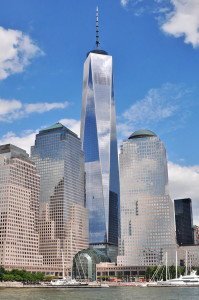
With 104 floors, One World Trade Center has taken the crown for the tallest building in the Western Hemisphere and the 5th tallest in the world. Locally referred to as the Freedom Tower, the building was built by The Port Authority of New York and New Jersey and it mocks Britain’s Independence Day date with its height in feet.
The One World Trade Center amounts to about 30 AirBus airplanes in height.
432 Park Avenue - 1,398 ft.
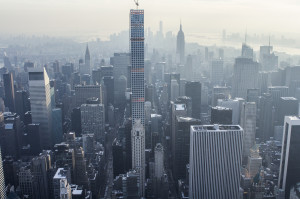
The view from this luxury condo building is breathtaking as it towers over 57th street or otherwise coined as “Billionaire’s Row”. 432 Park Avenue is 96 stories tall and 10 of which are designated to penthouses. The building contains 104 condos, the first sold for $95 million which can clearly set the standard for the building’s prices.
432 Park Avenue amounts to a little over 82 giraffes in height.
Empire State Building - 1,250 ft.
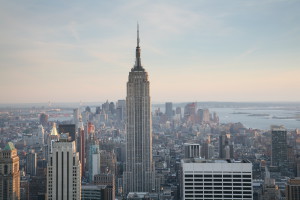
Located in Midtown, Manhattan, the Empire State Building is often seen as New York City’s most recognizable landmark aside from the Statue of Liberty. The building is the 25th tallest in the world and with 102 floors it’s the third tallest building in NYC. In 2010, the attraction underwent a $550 million renovation to make the building more energy efficient.
The Empire State Building in height is the equivalent of 21 18-Wheeler trucks.
Bank of America Tower - 1,200 ft.
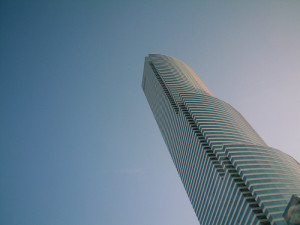
The Bank of America Tower has always been recognized as one of the best designed modern structures from an architectural and innovative standpoint. The building only has 58 floors but it’s still the sixth largest building in the world and the fourth largest in the city. The building took a $1 billion budget to reach fruition and it is established as one of the most energy efficient structures in the world.
The structure is as tall as about 12 blue whales.
Chrysler Building - 1,046 ft.
The Chrysler Building is the tallest brick building in the world but the 5th tallest building on this list overall. The building used to be the headquarters of the Chrysler Corporation for a couple of decades between the years of 1930 into the 1950s. But the skyscraper never belonged to the corporation, Walter P. Chrysler paid for the building himself for the purpose of his children’s inheritance.
The Chrysler Building is as tall as 2092 iphones.
The Remarkable Story Of How New York City Gets Its Water
With such a massive population, New York City’s water supply has it’s work cut out which is why the city’s internal system still stands as one of the most intricate. The Big Apple’s water supply serves a span of 125 miles while delivering one billion gallons of drinking water to over nine million people.
As far as the origins of the city’s water system - in 1842, the City decided to impound water from the Croton River via the Old Croton Aqueduct. The aqueduct had a capacity of about 90 million gallons per day. In 1883 the city then formed a commission to build a second aqueduct from the Croton watershed in addition to more storage reservoirs.
The Board of Water Supply was established in 1905 by the State Legislature as well as the Catskill region developed to be an additional water source for the city. The Board of Water Supply proceeded to plan and construct facilities to impound the waters of the Esopus Creek to deliver the water throughout NYC.
Water for this system is impounded in three upstate reservoir systems that ultimately house 19 reservoirs and three controlled lakes. Overall, the system has a storage capacity of about 580 billion gallons. The three water collection systems were structured to be interconnected so that water transitions easily from one system to another.
Although New York City’s latest addition to their water supply system stands to be their biggest step forward yet. The U.S. Environmental Protection Agency ordered that the city filter its water and NYC had to make that upgrade at the cost of $3.5 billion. Located in the Bronx at Van Cortlandt Park, the Croton Water Filtration Plant is currently filtering 10% of the city’s drinking water and it plans to take on a bigger load.
The filtration plant was a must-needed upgrade as the city’s population continues to grow. But the most interesting aspect of the water system still stands even from system’s 1842 inception. 95% of the total water supply is generated by gravity and just 5% requires a pressure pump to continue the water flow.
New York City’s goal is to increase their new filtration system’s capacity to the point where it plays a hand in all of the water consumed throughout the five boroughs and with their $3.5 billion dollar addition, they are in clear route towards that goal.
The Oldest Residences in New York City
New York City is a never-ending developing city but there are some historic landmarks that have stood their ground after planting their roots. The landscape of the city changes relatively drastically with new towering buildings and urban parks developed over the years.
Well just as significant as constant change is within the big apple, it’s also a city harboring stories of American heritage. Here are New York City’s 4 oldest buildings:
1. Pieter Claesen Wyckoff House, 1652. The house located in Milton Fidler Park is one of the first buildings built by Europeans on Long Island. The Pieter Claesen House is the oldest standing example of a ‘Dutch saltbox house’ in the U.S. which makes it a National Historic Landmark.
2. Lent-Riker-Smith Homestead, 1654
The Lent-Riker-Smith Homestead is so-named for the only three owners the house has had since it was built in 1654. Believed to be the oldest inhabited private home in America, the Queens home’s grounds include a secret garden and a 132-tombstone graveyard.
3. John Bowne House, 1661.
This house was used by Quakers in Queens, NY as a meeting place of refuge when religious freedom was a pressing issue in society. The Browne family lived in this estate until 1945 and rumors still linger that the house was operating as a safe house for the Underground Railroad. The John Brown House is currently a museum in Flushing, Queens. Stop by if you get that chance.
4. Billiou-Stillwell-Perine House, 1662.
This is the oldest standing building on Staten Island and built by one of the original Dutch settlers, Pierre Billiou. Billiou arrived to New Amsterdam after fleeing religious persecution in Europe just the year before.
Secret Spaces of New York City: The Conservatory Garden of Central Park
New York City is full of different attractions so it’s not uncommon that there are an abundance of places in the city that fly under the radar. Take Central Park for example, the space hangs its hat on being the most visited park in the United States with 37.5 million visitors per year. But even with the attention given to Central Park, there are parts of the NYC’s biggest greenland that is still left undiscovered and one of which is the park’s Conservatory Garden.
The Conservatory Garden is the formal garden of Central Park, taking up about six acres of the land. Surrounded by yew hedges and colorful, crabapple trees, the Conservatory Garden is easy to miss but inside, there’s a whole world to uncover. With the garden divided into three small gardens, each with a designated international theme, this large lawn could easily become your favorite place in Central Park.
Designed to become Central Park’s quiet zone and remote space for either leisure or more formal events, the Conservatory Garden is worth getting to know.
The Italianate Center Garden
Mimicking the surrounding of the entire Conservatory Garden, the Italianate Center Garden is also lined with yew hedges and crabapple trees that fence the large green space. On the west side of this part of the garden sits a 12-foot jet fountain.
There are little intricacies throughout the garden that make this section worth your time when you get the chance to visit.
The French-style garden
The northern garden carries a French theme even through its architecture. German sculptor, Walter Schott, crafted the Three Dancing Maidens fountain located in the center of the garden. Central Park is known for its selection of shrubbery and distinct landscaping. The French-style garden has a pretty diverse list full with spring tulips, Korean chrysanthemums, and Japanese holly.
English-Style Garden
To the south of the French themed garden is the English-style garden, protected by a border of five different types of trees. Like every other section of the Conservatory Garden, there’s a sculpture that marks the spot. Sculptor, Bessie Potter Vonnoh, created a memorial for Frances Hodgeson Burnett, the author of the children’s book - The Secret Garden.
Central Park’s Conservatory Garden is located on the east side of the park from 104th st. to 106th st. Drop by the Conservatory Garden in your down time and relax in one of New York City’s secret spaces.
